Human-AI interaction
Design AI tools people can understand and correct.
A slowly breathing waveform generated by the two-operator FM equation from SensorSynthFM, drawn as layered ember filaments.
DESIGN / SYSTEMS / SOUND
I make the beautiful ones, for big problems and small. I learn what needs to be built, who it's for, and how it works. Then I build it.
The drawing and audio share these values. You can also drag the field directly; arrow keys tune it and Home resets it. No portfolio information depends on the control.
Hiring path
Creative technologist
Design AI tools people can understand and correct.
Bring lived Ableton, synthesis, and electronic-music context to the study of expert creative software.
Use observation, interviews, accessibility audits, and code prototypes to discover what is worth making.
Current builds in Building: KB POMO for kettlebell breaks, Music Atlas for finding connections between tracks, and Oblique Oracle for reflection through ambiguous prompts.
About
My MS in User Experience at Kent State is in progress, expected December 2026. It has added research depth to a wider practice shaped by English writing, documentary research, electronic music, physical systems, and code.
I analyze a problem until I know what it is fundamentally about, then build the actual solution.
Read the longer versionTotal memories over time: 2,318 on March 28; 4,342 on May 7; 6,173 on September 29, 2026.
Agent infrastructure
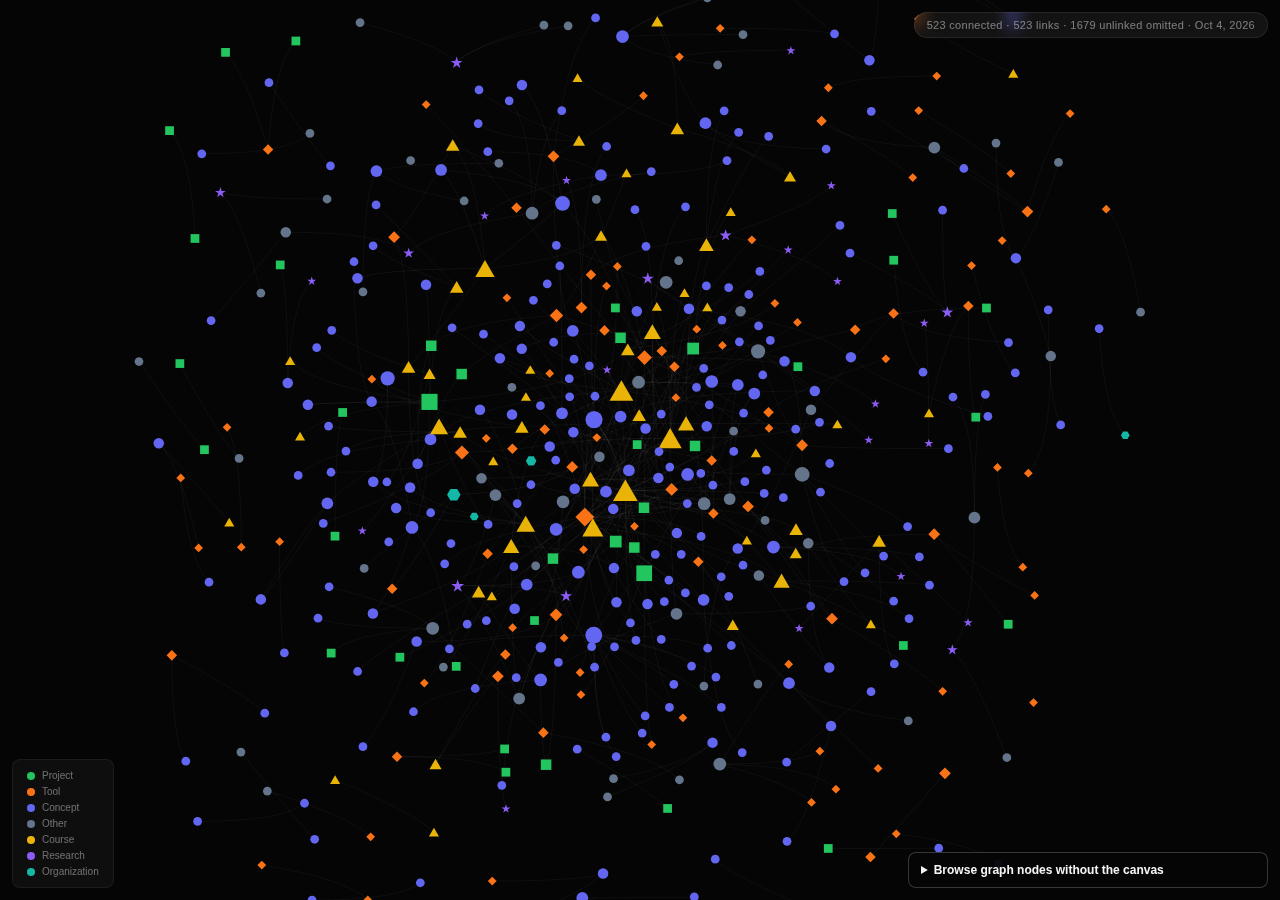
Clarence is a self-hosted multi-agent memory system on a single SQLite database: structured memories, an entity-fact knowledge graph, semantic vector search, scheduled jobs, and public telemetry. Its September 29, 2026 public snapshot reports 6,173 total memory records including 2,974 current memories and 10,373 current facts. Governance is single-writer by design: one agent writes durable memory, and every other agent submits structured handoffs that a review filter accepts or rejects.
Before reranking shipped, a 40-query retrieval benchmark ran against the live database. Hit@1 went from 19 of 40 to 34 of 40, and reranking shipped as an optional add-on, off by default.
The case study also names what is not solved. Visibility of system status, Nielsen's first heuristic, remains the main open failure.
A static trace of the two-operator FM equation SensorSynthFM plays: a carrier wave shaped by a modulator.
Capstone · built in public
SensorSynthFM is an iPad FM synthesizer that treats motion, touch, and room energy as modulation sources, my Kent State MS UX capstone, built in Swift with AudioKit and SwiftUI.
The September 20 build passed 57 Xcode tests and my review on a physical iPad. Held chords, retriggering, and removing single notes all worked. I have not tested it with outside users or confirmed the ten-voice target.
Clarence writes code fast. I own the musical judgment, the UX direction, and every public claim. It cannot decide whether a mapping feels musical.
Heuristic severity profile for Ableton Learning Music: four heuristics at severity 1, three at severity 2, and Help and Documentation at severity 3.
A decade inside, then the audit
I co-founded the Pittsburgh Ableton User Group in 2015 and have led it for a decade, serving as direct liaison to Ableton's international team. I can distinguish between a design decision and a design failure because I understand the ecosystem from the inside.
The suite applies five methods across that ecosystem: a stakeholder analysis of Live (2024), Nielsen heuristic evaluations of Note (2025) and Learning Music (2025–26, severity-scaled), a cognitive walkthrough of Learning Synths (2026), and a COGA-grounded cognitive accessibility evaluation of ableton.com and Live 12 (2026).
Add icon labels and a simpler First Session mode; Push already offers label controls.
Issue counts from the NPR audit: axe found 74 issues on the home page versus 7 on a story page; WAVE found 78 versus 12.
Access
The anchor artifact is a VPAT 2.5 accessibility conformance report on NPR.org covering all 56 WCAG 2.1 A/AA accessibility criteria using axe DevTools, WAVE, HeadingsMap, and custom Python static-analysis scripts. Three criteria are documented Does Not Support: 1.4.1 Use of Color, 1.4.3 Contrast (Minimum), and 4.1.2 Name, Role, Value. The sharpest pair is 74 issues on the NPR home page against 7 on a story page.
The frontier is cognitive accessibility. The COGA (Cognitive and Learning Disabilities Accessibility) Ableton evaluation covers ADHD, dyslexia, working memory, and executive function. Next: open-sourcing an audit-to-VPAT reporting tool seeded from the NPR scripts.
Visible focus on every control, reduced motion honored, motion pausable by button, and no interaction required to reach portfolio information.
Full portfolio: 19 projects, including a report from a shared 15-participant moderated mobile study →
Role / availability / proof
UX research · interaction design · human-AI interaction · agentic UX
I am interviewing now for UX research, interaction design, and human-AI interaction roles where research, design, building, and critical judgment are valued together.
Proof includes a report from a shared 15-participant moderated study across five facilitator groups, a 56-criterion NPR WCAG audit, the SensorSynthFM physical-device build, and ten years of Pittsburgh Ableton User Group leadership.
MS User Experience · Kent State · Reported GPA 3.962 · December 2026 · interviewing now · Résumé →
Tell me what you are working on. I will tell you whether I can help.